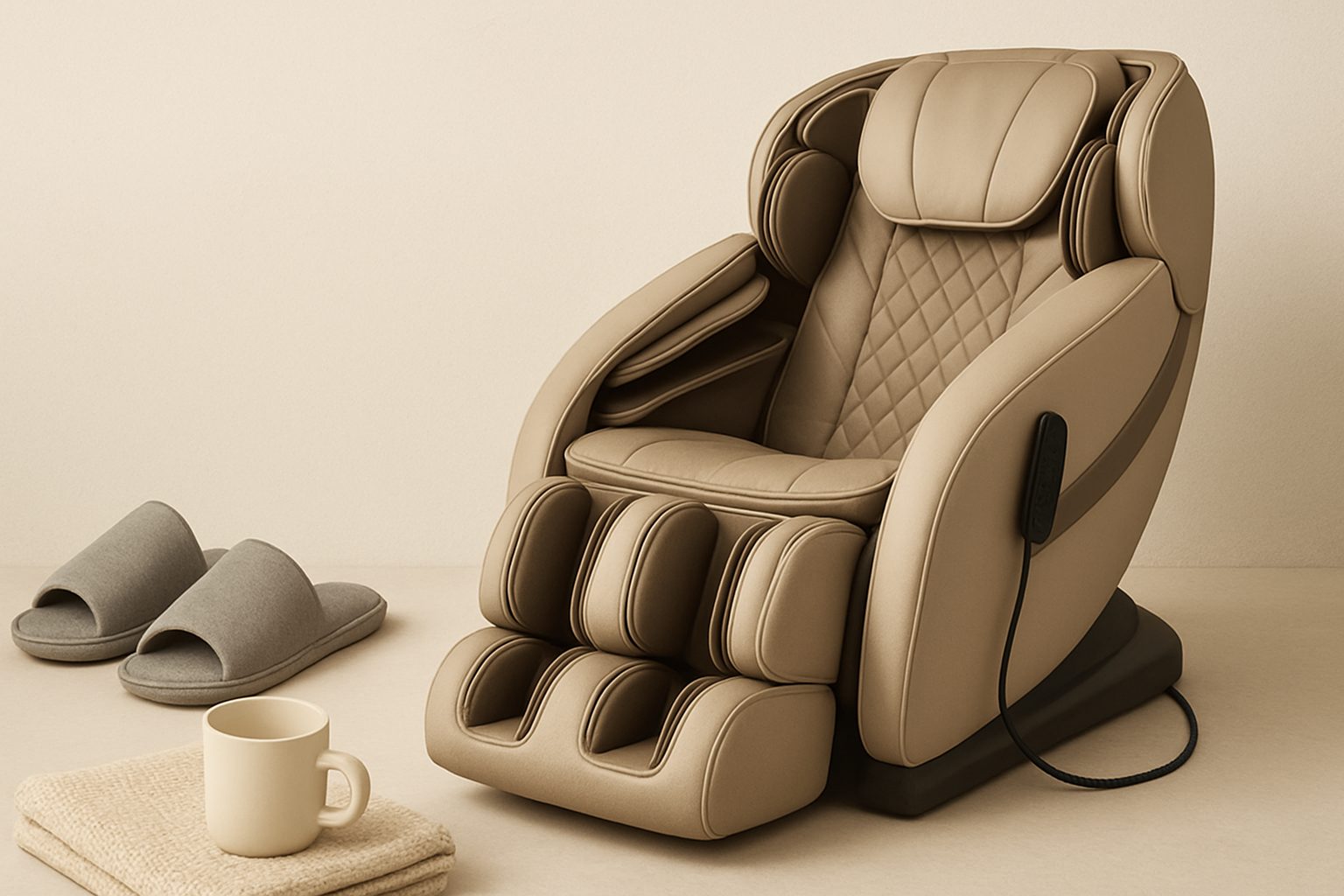
Osaki vs Ogawa Massage Chairs UK: Which Brand Is Worth Your Money?
If you're shopping for a premium massage chair in the UK, you've likely stumbled across Osaki and Ogawa. Both brands dominate the high-end segment, yet they take distinctly different approaches to engineering, pricing, and market positioning. This comparison cuts through the marketing to help you pick the right one for your needs and budget.
Build Quality and Durability
Osaki has built its reputation on robust engineering. Their chairs typically use reinforced synthetic leather over dense foam padding, paired with steel frames that feel solid under load. The mechanism housings are usually metal rather than plastic, which translates to fewer rattles and longer component life. Osaki models tend to be heavier (often 130–160 kg), which correlates with substantial internal construction rather than light economy builds.
Ogawa takes a more refined approach. Their chairs emphasise ergonomic design and precision manufacturing, often using premium materials like genuine leather or high-grade faux alternatives. The frames are equally sturdy, but Ogawa typically achieves comparable strength with slightly less bulk—their chairs often weigh 110–140 kg. This leanness comes from more efficient engineering rather than corner-cutting, though it does mean less margin for error during installation or repositioning.
In practical terms: Osaki feels industrial and built to absorb punishment; Ogawa feels polished and engineered for longevity. Both will survive 5–7 years of regular use without major structural failure, though Ogawa models may require gentler handling during setup.
Roller Technology
This is where the two brands diverge most visibly.
Osaki typically uses larger, more aggressive rollers (often 3D or 4D systems) that deliver deeper, more vigorous massage strokes. The roller heads move laterally across the back, targeting muscle groups broadly. They're excellent for stiffness relief and muscle recovery, though some users find the intensity uncomfortable for relaxation. The technology is proven and mature—Osaki has spent years refining these mechanisms.
Ogawa favors precision roller systems, often with more targeted, anatomically specific movements. Their rollers tend to be smaller and more numerous, creating a gentler, more nuanced massage experience. Many Ogawa chairs include airbag compression sequences synchronized with roller movement, which feels more like a professional massage than pure mechanical vibration. The tech is newer and more sophisticated, reflecting higher development costs.
Choose Osaki if you want a straightforward deep-tissue workout. Choose Ogawa if you prefer a balanced experience that mimics hands-on massage technique.
Warranty and UK After-Sales Support
Osaki chairs sold in the UK typically come with a 3–5 year structural warranty, though cover for mechanical components (motors, pumps, electronics) is often more limited. Spare parts are available through UK distributors, though wait times for shipping can stretch 2–3 weeks if items aren't stocked locally.
Ogawa generally offers more comprehensive UK support. Their warranty terms are often more generous (frequently 5 years on core components), and they maintain better dealer networks across the country. UK-based service teams tend to respond faster, and spare parts for popular models are more readily available. This comes at a premium—Ogawa's support infrastructure adds to the purchase price.
If you value peace of mind and want responsive service, Ogawa's stronger aftermarket presence is worth factoring in. If you're willing to troubleshoot or wait for parts, Osaki's warranty remains adequate.
Price Points
Osaki's UK pricing typically ranges from £2,500 to £5,500 for their mainstream to premium range. They offer genuine value in the £3,000–£4,000 bracket, where you get solid engineering and effective massage without paying for brand prestige.
Ogawa models usually start around £4,000 and extend to £7,000+ for their flagship ranges. You're paying for refiner engineering, superior aftermarket support, and a subtly more sophisticated experience. The price premium is real but reflects genuine differences rather than marketing inflation.
The Verdict
| Factor | Osaki | Ogawa | |---|---|---| | Build strength | Excellent (heavier) | Excellent (refined) | | Massage intensity | Deep & vigorous | Nuanced & balanced | | Spare parts availability | Good (minor delays) | Excellent (UK stock) | | Warranty quality | Standard | Above average | | Price range | £2,500–£5,500 | £4,000–£7,000+ | | Best for | Budget-conscious buyers seeking power | Buyers prioritising support & experience |
Bottom Line
Osaki suits you if you want straightforward, effective deep-tissue relief without overpaying for brand prestige. Their chairs are built to last and deliver genuine massage benefit at competitive prices. Ogawa is the better choice if you value refined engineering, UK-based support, and a more nuanced massage experience—and you're willing to pay for it.
The honest truth: both brands outperform cheaper alternatives by a wide margin. Your actual choice should hinge on whether you prioritise value-for-money intensity (Osaki) or comprehensive support and subtler sophistication (Ogawa). Budget around £3,000–£4,500 for a solid Osaki, or £4,500–£6,000 for a reliable Ogawa that will ship with strong UK aftercare.
For detailed breakdowns of specific models, explore individual product reviews covering exact features, user feedback, and real-world performance.
More options
- Amazon UK – Best Massage Chairs (General) (Amazon UK)
- Amazon UK – Zero Gravity Massage Chairs (Amazon UK)
- Amazon UK – Shiatsu Massage Chairs (Amazon UK)
- Amazon UK – Budget Massage Chairs Under £500 (Amazon UK)
- Amazon UK – Luxury & Premium Massage Chairs (Amazon UK)